
9 Days Northern Circuit Route
A longer, quieter circuit around Kilimanjaro with generous acclimatization time.
This climbing program follows the established camp or hut sequence for the selected Kilimanjaro route. Daily walking times and distances are approximate because pace, weather, trail conditions and acclimatization affect each trekking day. Mountain guides monitor the group throughout the climb and may adjust timing for safety.
Main Areas on This Tour
This route is arranged to keep the program practical while allowing useful time in the principal places listed below. The final order can change when seasonal conditions, accommodation location, park access or flight times require an adjustment.
- Mount Kilimanjaro
Highlights Along the Route
These are the principal areas connected to this itinerary. The exact wildlife, weather and local conditions are different on every departure.
Mount Kilimanjaro
A longer, quieter circuit around Kilimanjaro with generous acclimatization time.
Detailed Daily Program
Open each day for the full description. The program below is based on the tour material supplied for this website; final lodge names, operating times and any optional activities are confirmed with the quotation.
You will be picked up at the Kilimanjaro International Airport and transferred to your hotel in Moshi town; you will meet your guide who will brief you on your upcoming trek and do an equipment check to make sure you have all the necessary mountain gear. The missing gear can be rented on this day.
Experience & Practical Details
Walking time is approximate and depends on group pace, weather, trail conditions and altitude response.
Guides control the pace, rest stops and daily mountain routine with acclimatization and safety in mind.

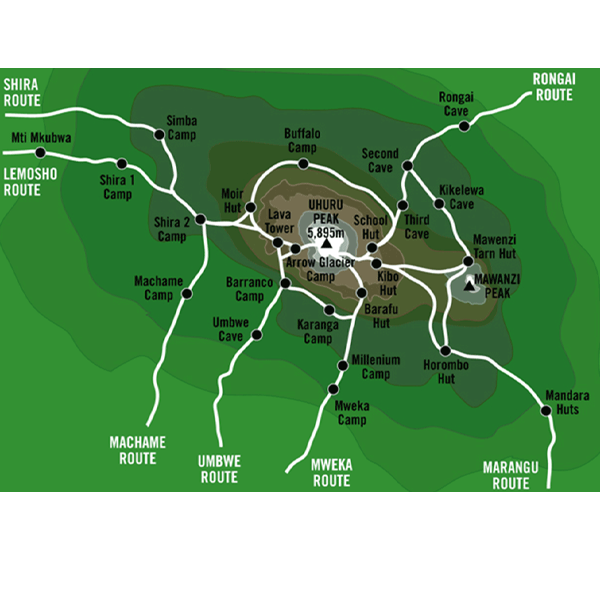
The Northern Circuit Route begins at Londorossi Gate (2,100 meters) in the West, the same start point as the Lemosho Route. The drive to Londorossi Gate takes approximately two hours from Moshi and considerably longer from Arusha. Registration with the Kilimanjaro National Park authorities occurs at the gate and then you will be driven further up the mountain to the trailhead starting point.
Most tour operators serve lunch here before the short first day trek to Mti Mkubwa Camp (2,820 meters) begins. You may get lucky and spot large wildlife like elephant and buffalo that sometimes emerge from the rainforest onto the path as you trek towards your first camp. Dinner will be served when you reach Mti Mkubwa Camp.
Experience & Practical Details
Lemosho begins on the western side of Kilimanjaro and normally crosses the Shira Plateau before joining the southern circuit.
Its longer approach allows gradual altitude gain before the upper mountain stages.
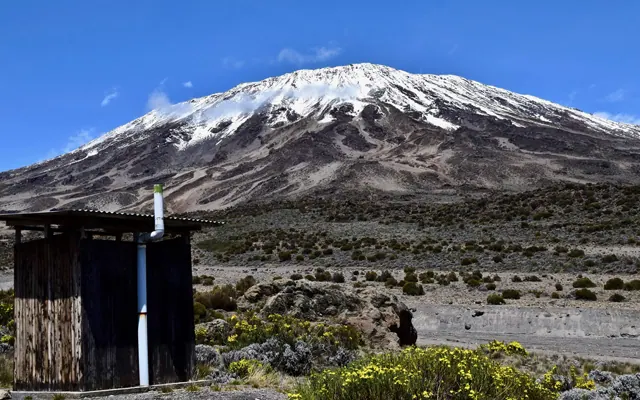
The Northern Circuit traverses around the quieter northern side of Kilimanjaro after the western approach.
The longer route provides additional time at altitude before the summit attempt.
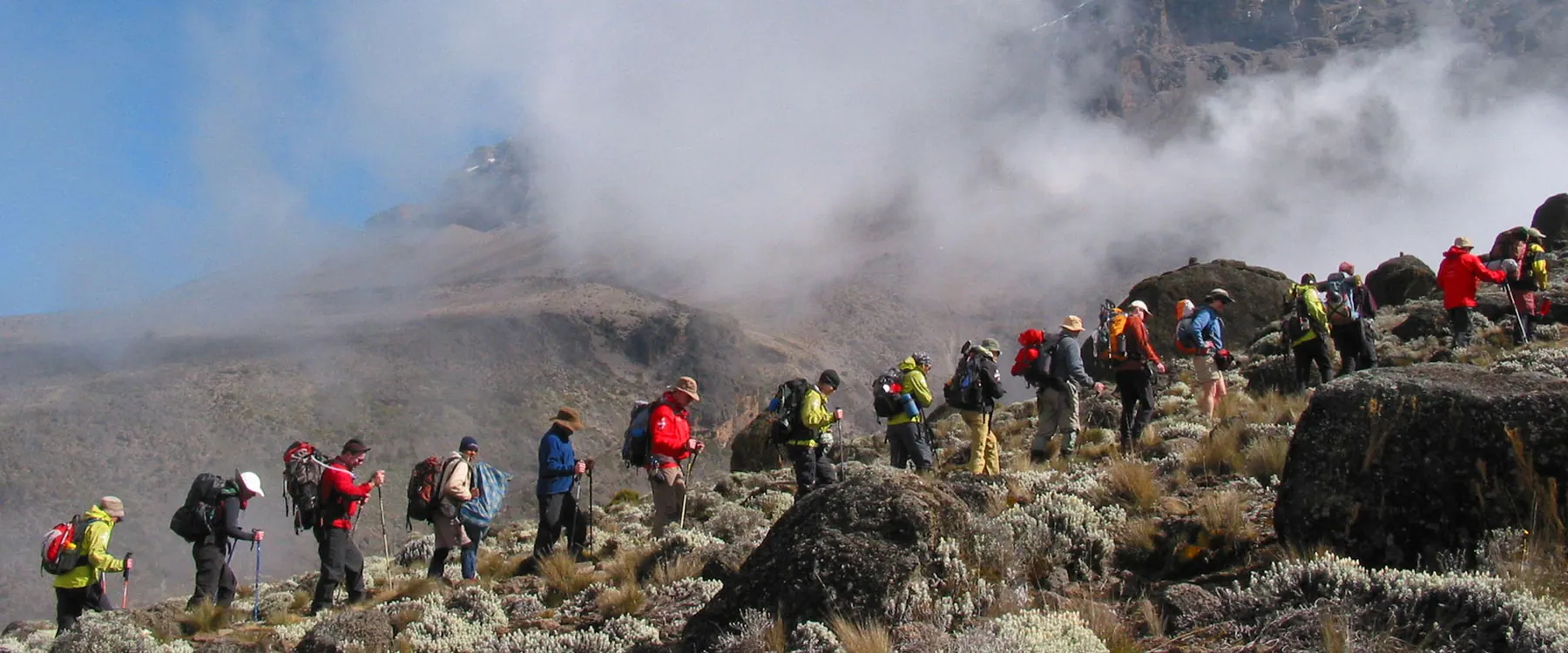
On day two you will spend the first hour trekking through the last section of rainforest path before entering the low alpine moorland zone which follows up onto the Shira Plateau. The trek is relatively short and gradual, ending at Shira Camp 1 (3,610 meters).
Experience & Practical Details
Shira approaches from the western highlands and reaches the Shira Plateau early in the program.
The starting altitude is relatively high, so previous acclimatization and careful pacing are important considerations.
On day three the trek crosses the Shira Plateau from Shira Camp 1 to Shira Camp 2. Nine day trekkers usually spend the night at Shira Camp 2 where they will join trekkers from the Machame Route. At Shira Camp 2 it is worth trekking a little higher up the plateau to enjoy the stunning view across the valley below and Western Breach of Kilimanjaro above.
The plateau is exposed so be prepared for a cold night with temperatures getting below zero.
Experience & Practical Details
Machame is a camping route that approaches Kilimanjaro from the south and uses a varied ascent profile before descending via Mweka.
The route includes important acclimatization sections, and the daily pace is controlled by the mountain guides.
Shira approaches from the western highlands and reaches the Shira Plateau early in the program.
The starting altitude is relatively high, so previous acclimatization and careful pacing are important considerations.
Day four is a long trek heading east which passes through the ‘Garden of the Senecios’ and then enters the high alpine desert zone. The morning is spent trekking up to Lava Tower and the iconic Shark’s Tooth rock formation at 4,600 meters, where you will have lunch. After lunch you will join the northern circuit heading down to Moir Camp at 4,200 meters (see map above).
This is an important day in your trek as you will get to experience high altitude and then sleep low, which is good for the acclimatisation process.
Experience & Practical Details
The Northern Circuit traverses around the quieter northern side of Kilimanjaro after the western approach.
The longer route provides additional time at altitude before the summit attempt.
Shira approaches from the western highlands and reaches the Shira Plateau early in the program.
The starting altitude is relatively high, so previous acclimatization and careful pacing are important considerations.
Day five involves a moderately steep climb out of Moir Valley. Trekkers can take a small detour here to climb the summit of Little Lent Hill at 4,375 meters before returning to the Northern Circuit trail. From here the route follows a series of inclines and declines, skirting around the northern slopes of Kibo to Buffalo Camp (4,020 meters).The trek gives great vistas out across the plains that lie north of Kilimanjaro and stretch out to the Kenyan / Tanzanian border.
You will arrive at Buffalo Camp just after midday, where you will have lunch and have time to rest after a long day hiking.
Experience & Practical Details
The Northern Circuit traverses around the quieter northern side of Kilimanjaro after the western approach.
The longer route provides additional time at altitude before the summit attempt.
Day six starts with a climb up the Buffalo ridge and down into Porfu Camp where lunch is usually served. The route then continues east around the northern slopes to the Rongai Third Cave at 3,800 meters. The trek is shorter than the day before and by now you should be feeling well acclimatised to the altitude.
You will arrive at the Third Cave just around mid-afternoon.
Experience & Practical Details
Rongai approaches Kilimanjaro from the north, close to the Kenya border, and descends on the Marangu side.
The northern approach has a different landscape character from the more frequently used southern routes.
Day seven involves a steady incline up and over the Saddle which sits between the peaks of Kibo and Mawenzi Peak. Trekkers then continue walking south-west up to School Hut (4,800 meters). After arriving at School Hut you will be served an early dinner and then you should get some shut-eye as you will be awoken before midnight to start your summit attempt.
Remember to prepare all your gear, including warm clothes, insulated water bottles, snacks, headlamp and camera before going to bed.
Experience & Practical Details
Walking time is approximate and depends on group pace, weather, trail conditions and altitude response.
Guides control the pace, rest stops and daily mountain routine with acclimatization and safety in mind.
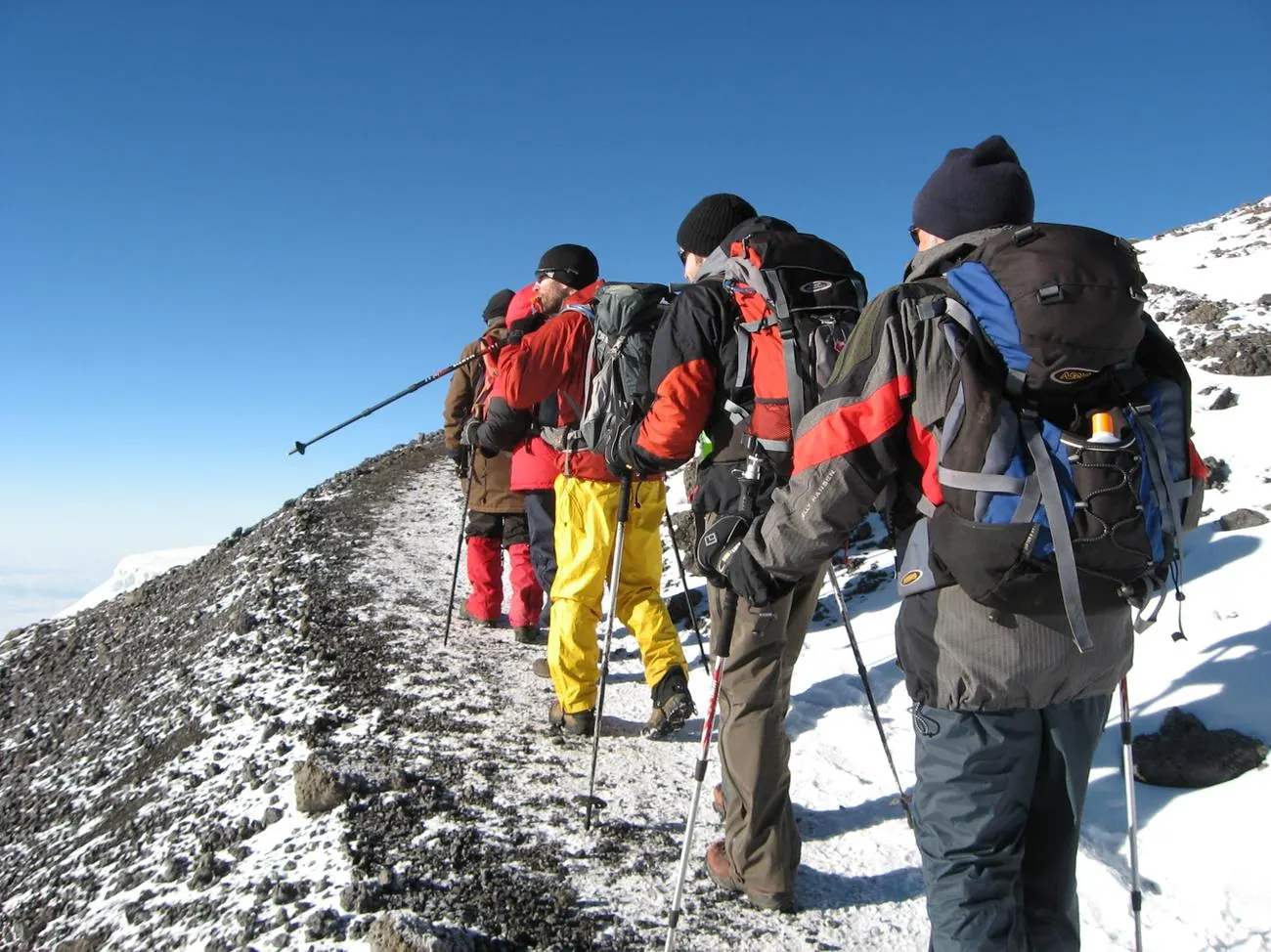
You will be awoken around 11:30 with hot tea and biscuits and will then begin the steep incline up the slopes of Kibo under the cover of darkness. Your first check-point is Hans Meyer Cave where you will take a short break. The climb steepens as you approach Gilman’s Point (5,681 meters), which will be around 5-6 hours after departing School Hut.
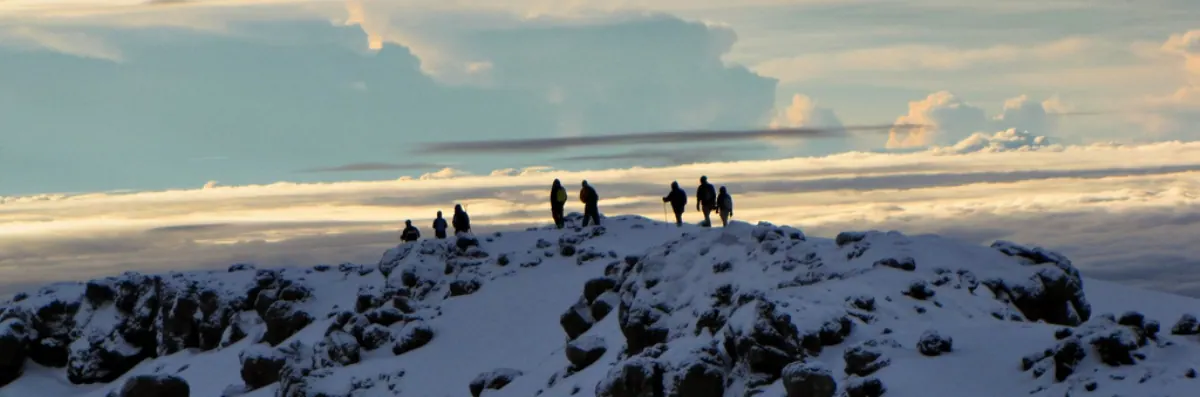
Take a moment to enjoy the approaching dawn and incredible view out and across to Mawenzi Peak, but remember you still have 2 hours trekking to reach Uhuru Peak so dig deep for the energy. The slope flattens as you head west around the crater rim and you should arrive at the summit at or just after sunrise. Your stay here will be brief so get as many pictures as you can of the incredible views and surrounding glaciers.
You will then retrace your steps back around the crater rim to Stella Point (5,739 meters) where you will turn south and head down the heavily screed slopes of Kibo to Barafu Camp (4,680 meters). Most trekkers take a short break here before continuing down to Millennium Camp (3,950 meters) for your final night on the mountain. In total you will be trekking for 14-16 hours on day eight so it is important to pace yourself, remain hydrated and keep your blood sugar levels up.
Note: some tour operators return via Gilman’s Point to Horombo Hut using the Marangu Route.
Experience & Practical Details
Marangu is the Kilimanjaro route that uses mountain huts rather than camping for the standard overnight stops.
The ascent and descent follow the same broad side of the mountain, with acclimatization depending strongly on the number of days selected.
Barafu is the main high camp used before summit attempts on several southern Kilimanjaro routes.
Rest, hydration, equipment preparation and an early night are important before the summit departure.
The final day is a short hike through the dense montane rainforest from Millennium Camp (3,950 meters) to Mweka Gate (1,640 meters). At the gate you will need to sign-out with the authorities, who will also provide you with your official certificate – a green certificate for those who made it to Gilman’s Point and a gold certificate for those who reached Uhuru Peak. It is customary to give your guide and porter tips before being driven back to your hotel in Moshi.
Experience & Practical Details
Uhuru Peak is the highest point on Mount Kilimanjaro at 5,895 metres above sea level.
Summit timing depends on pace, weather, trail conditions and each climber’s response to altitude.
Mweka is the standard descent route for several Kilimanjaro itineraries.
The descent moves rapidly from alpine terrain back toward rainforest and the park exit.
What Is Normally Included
- Professional guiding for the confirmed tour
- Transport and transfers specifically shown in the final itinerary
- Accommodation and meals specifically listed in the quotation
- National park, conservation or activity fees specifically listed in the quotation
- Drinking water during the operating tour where stated
- Government taxes applicable to the included services where stated
What Is Normally Excluded
- International flights and Tanzania visa costs
- Travel insurance and personal medical expenses
- Tips and gratuities
- Personal equipment, laundry and beverages unless included
- Optional activities not shown in the final quotation
- Any service not specifically listed under inclusions
Tour Images
Frequently Asked Questions
Request This Tour
Send your preferred dates, number of travelers, accommodation level and any additions you want. Ruhala will reply with availability and a detailed quotation.
 WhatsApp